The Complete Guide to Museum & Gallery LED Track Lighting
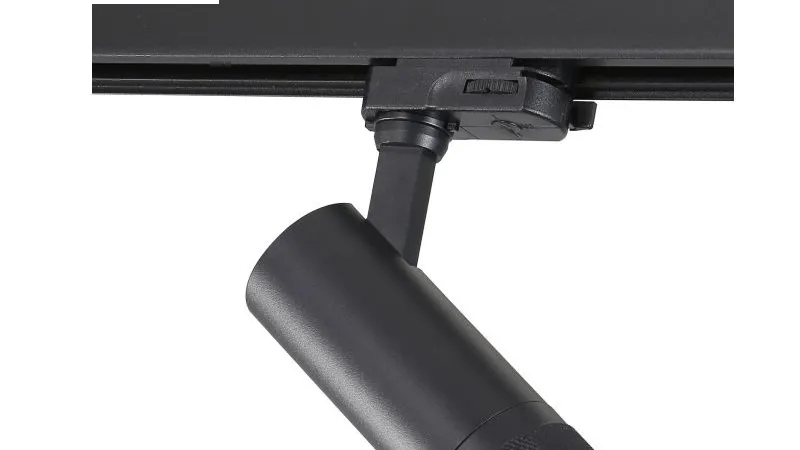
Museum and gallery lighting demands the highest standards of precision, color fidelity, and conservation. Unlike general commercial lighting, museum track lighting must render colors with absolute accuracy while protecting sensitive artifacts from UV and IR radiation. This guide covers everything you need to specify the right LED track lighting system for museum and gallery spaces.
Why LED Track Lighting Is the Standard for Museums
Track lighting offers unmatched flexibility for museum environments where exhibitions change frequently. A well-designed LED track light system allows curators to reposition fixtures, adjust beam angles, and dim individual luminaires without rewiring. This adaptability makes track lighting the preferred choice for galleries, museums, and exhibition halls worldwide.
Key advantages of LED track lighting for museums include:
- Directional flexibility — adjustable spotlights can highlight artwork from any angle
- Zero UV emission — LEDs produce no ultraviolet radiation, protecting pigments and textiles
- DALI dimming — precise 0.1% dimming for conservation-sensitive environments
- Color consistency — SDCM ≤3 ensures uniform color across all fixtures
CRI and Color Rendering: Why CRI90+ Matters
Color Rendering Index (CRI) is the single most important metric for museum lighting. A CRI of 90 or higher ensures that colors appear natural and accurate under the light source. For museums displaying paintings, textiles, or historical artifacts, CRI95 or even CRI97 is recommended.
Beyond CRI, the R9 value (red rendering) is critical for warm-toned artwork. Many standard LED chips score poorly on R9 despite having an acceptable overall CRI. Always specify luminaires with R9 > 50 for museum applications.
Our commercial LED track lights are available with CRI90+ and CRI95+ options using premium COB chips from OSRAM and Bridgelux, specifically engineered for museum and gallery environments.
Beam Angle Selection for Museum Lighting
Choosing the correct beam angle is essential for effective museum lighting:
- Narrow beam (≤15°) — for accent lighting on small sculptures, jewelry, or individual artifacts
- Medium beam (15-25°) — for illuminating individual paintings or wall-mounted exhibits
- Wide beam (25-40°) — for general gallery wash lighting and large-format artwork
- Wall wash (asymmetric) — for evenly illuminating entire gallery walls
Zoomable track lights with adjustable beam angles (15°-60°) offer the ultimate flexibility for museums that host rotating exhibitions. A single fixture can serve multiple lighting roles as exhibitions change.
DALI Dimming for Conservation
Museum lighting requires precise dimming control to balance visibility with artifact conservation. DALI (Digital Addressable Lighting Interface) is the gold standard for museum dimming because it allows individual fixture control, 0.1% dimming resolution, and programmable scenes.
DALI-compatible track lights enable curators to set different light levels for different zones — brighter for interactive displays, dimmer for light-sensitive artifacts — all controlled from a single interface. This level of control is impossible with traditional TRIAC or 0-10V dimming systems.
Thermal Management and Fixture Quality
In museum environments, luminaires often operate for extended hours at low dim levels. Proper thermal management ensures consistent color output over the fixture's lifetime. Look for track lights with 6063 aluminum heat sinks and verified junction temperature ratings.
Every 10°C reduction in LED junction temperature doubles the rated lifespan. For museums where fixtures may operate 12+ hours daily, thermal design directly impacts maintenance frequency and color stability.
Recommended Products for Museum Lighting
For museum and gallery projects, we recommend:
- COB track lights with CRI90+ — DALI dimmable 40W museum track light with zoomable beam
- High-CRI linear track — Customizable high-CRI linear LED track light for continuous runs
- Wall washer — Adjustable stretch wall washer for even wall illumination
Conclusion
Specifying museum LED track lighting requires attention to CRI, beam angle, dimming protocol, and thermal design. By selecting fixtures with CRI90+ or higher, DALI dimming, and proper optical control, museums can achieve both conservation goals and exceptional visual presentation.
For project-specific recommendations and custom configurations, contact our lighting specialists for a consultation.