How to Choose a LED Track Light Manufacturer in China: A 2026 Buyer's Checklist
China supplies over 70% of the world's LED lighting, and a two-hour drive around Guangzhou and Zhongshan covers hundreds of track-light factories. The real competition between them is not price — it is how much of their quality story is verifiable. This guide turns the 2026 buyer's due-diligence into a 6-step check with a hard document list, because in this industry the difference between a 0.2% defect rate and a 2% defect rate shows up a year later as a customer dispute, and the invoice for both was the same.
Why "Choosing a Product" Is Really "Choosing a Factory"
A track light is five components — LED chip, driver, heat sink, body, optics — assembled on a line. The same 15W fixture from two factories differs in binning discipline, solder quality, thermal interface, aging duration, and how uniformly the driver's output matches the chip. Chinese manufacturing output capacity is the world's largest but the certification game is also the largest — one of the most common failures in our industry is buying a "CE" fixture whose certificate belongs to a different model by a different company. Verify the factory, and the product risk largely resolves itself.
Step 1: Certifications — Verify the Numbers, Not the Stickers
Every decent supplier says "we are CE/UL certified". The verification is two lookups:
- Certificate number on the issuing body's own database, not the supplier's PDF. TÜV (tuv.com), SGS (sgsonline / register.sgs.com), Intertek (ETL directory), UL Product iQ — each searchable. Find the certificate, match the model number to what is being quoted.
- Scope match. A certificate covers a specific driver, harness and body combination. Swapping the driver voids it. Ask which certificate corresponds to this quotation and keep the report on file.
- Market-specific minimums: CE/LVD/EMC + RoHS for EU, UL/ETL or DLC for North America (see our certification guide), SAA/RCM with EESS registration for Australia (SAA guide), UKCA + UK-type for UK.
Step 2: The Factory Itself — Consider a Video Audit
| Check | What passes | What should alarm you |
|---|---|---|
| Business license | Valid, export scope on it, registered capital of at least 5M RMB for serious export factories | Freshly registered company with a 3-year-old website |
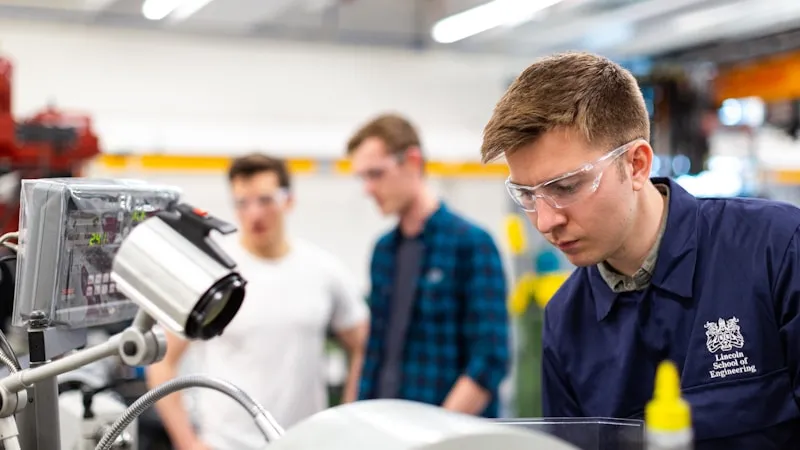
| Production site | ≥2,000 sqm with SMT line, assembly workshop, dedicated QC lab + aging rack area | Single-assembly-room "factories" that actually assemble bought-in parts (they are trading companies) |
| Line ownership | Owns tooling, mold workshop or documented partners; in-house engineering | Cannot show a single drawing or sample history |
| Video audit | Accepts live video tour or physical visit; shows QC during the call, not a prepared video | Pre-recorded showroom footage only |
Step 3: The Quality Process — Ask for the Flowchart
A reliable factory documents four checkpoints; ask for each stage's record format:
- IQC — incoming inspection of chips (bins), drivers (PF/THD), aluminum (6063?), connectors.
- IPQC — in-process: reflow profile records, solder-jet X-ray sampling, torque checks.
- FQC — 100% aging test: our standard is 24 hours at rated power (4 hours is the floor in this industry, and the difference is measurable) + photometric sampling + high-potential test.
- OQC — AQL random sampling (e.g., 2.5/4.0) with metrology for retained records.
Ask the defect-rate number directly: "what is your field defect rate?" A professional export factory cites a figure below 0.3% (ours: 2–3 per thousand). A good answer also names the warranty that pays for the answer's failures — industry standard is 2–3 years; real engineering factories do 4–5.
Step 4: Samples, OEM/ODM and Engineering Depth
- Sample turnaround — 7–15 days for standard trim; custom optics or housings 20–30 days with a confirmed P1/P2 milestone chart.
- OEM/ODM depth — does the factory have in-house R&D (optics simulation, driver integration, structure), or is it a copy shop? Ask what they have trademarked/patented.
- Sample quality vs bulk quality — 30% of industry disputes start with great samples and drifted production. Keep your approval sample as the signed reference (photographed, measured, dated).
Step 5: MOQ, Lead Time and Payment Terms
Track-light export MOQs typically run 100–500 units depending on customization; lead times 25–40 days after deposit for OEM, 15–25 for standard catalog items. Payment is 30% deposit + 70% before shipment (T/T) — the honest industry norm. When budgeting freight, our container loading calculator gives you carton count per 20GP/40HQ before the factory quotes it. Withstand:
- 100% upfront demands (no leverage later; a bad invoice is your only recourse).
- Unusually low delivery time on fully custom work (means the "custom" is catalog-stock).
- Vague breakdown floating: get a Proforma with FOB, freight and after-sales commitments per line.
Step 6: After-Sales That Pays
Write the warranty into the PO, with the trigger: replacement parts, and who carries the freight for repeated field failure. Requirements:
- Warranty ≥5 years for export premium (and no pro-rating gymnastics).
- Spare parts availability ≥5 years after last production run.
- Technical response within 24 hours; replacement-first culture on repeated failures.
Documents to Request in Round One
- Business license + factory photos/video (or live audit slot)
- Certificates with numbers + the test reports you can forward to a lab
- IES files for every quoted fixture (photometrics — verify the .ies renders in an IES viewer)
- LM-80 chip reports + driver data sheets; QC flowchart, AQL plan and aging protocol
- Sample quote with exact model/option matrix; lead time and MOQ table
- ISO 9001 audit report (the QMS certification, current)
If a factory cannot provide IES files, that by itself tells you something — photometrics are produced by the photometer every serious line owns.
Red Flags Checklist — Walk Away From These
- Cannot produce a verifiable certificate number (the #1 flag: look it up on TÜV/UL/SGS registers).
- Price 20%+ below the market for equivalent specs — component downgrades are the usual cause.
- Refuses physical visits or live video audits.
- No engineering answer for "isolated vs non-isolated driver" — the CS question that separates factories.
- No aging test in the quotation process.
About LightSeek
LightSeek is a Guangzhou manufacturer (est. 2017) focused on LED track lights, 24V/48V magnetic track systems, track rails and downlights, built on Tier-1 chips (Philips, Bridgelux, OSRAM, Lumileds) with Tridonic isolated constant-current drivers, a 24-hour aging test on every fixture, NATA-level documentation, and a 5-year no-pro-rating warranty — at 2–3 field defects per thousand. Certificates: CE/LVD/EMC, RoHS, CB, FCC, with select families UL/ETL, SAA/RCM, TUV. Details on our company page; OEM/ODM inquiries and IES/lighting data directly from get in touch.
Sources & Verification
This checklist reflects common practice in LED export sourcing (market MOQ/lead-time and payment norms sourced from China lighting export trade practice). Certification and regulation references: EN 60598, IEC 62386, AS/NZS 60598, UL 1598, and current EU ErP requirements. Your supplier's individual claims — certificate numbers, defect rates, aging protocol — should be verified against the issuing bodies' databases and your own test reports on the samples.
FAQ
How do I verify a Chinese LED lighting factory's certification?
Take the certificate number and look it up directly on the issuing body's database — TÜV, SGS, Intertek ETL, UL Product iQ. Match the model to the quotation, and ask who the certificate was issued to: the certificate must be in the supplier's name, on the exact quoted model variant.
What is a reasonable MOQ for track lights from China?
Catalog track lights commonly run 100–500 units depending on series; customized (branded, special optics, unique housing) raises it. LightSeek works with flexible MOQs and offers OEM/ODM from one design-led order — ask for the exact table per series rather than a single number.
What production size should a serious track light factory have?
A genuine export manufacturer typically holds ≥2,000 sqm of production including SMT, assembly and a QC lab with aging racks, and owns (or controls) its tooling. Anything that just assembles bought-in parts is a trading operation with a factory look.
What is the industry-standard payment term for LED lighting exports?
30% T/T deposit with the balance before shipment (70/30 against document copies on larger confirmed orders). Be wary of 100% upfront — hard to correct later. A formal Proforma Invoice should state FOB terms and after-sales commitments per line.
How long is the lead time for a track light OEM order?
Typically 15–25 days for existing-catalog items with your branding, and 25–40 days after deposit for fully customized products including tooling and photometric validation. Sample turnaround: 7–15 days standard, 20–30 days with new optics or tooling.
What is a 24-hour aging test and why does it matter?
Aging means running every fixture at rated power for a set duration before packing to catch early failures — the 24-hour test is the strict norm (industry floor is ~4 hours). Drops in current, color drift and driver instability show up in the first 24 hours; the sample of your order comes from the same population as the aging batch.
Which documents should I request before choosing a supplier?
Business license and export scope; certificates with verifiable numbers plus transferable test reports; photometric IES files per model; chip LM-80 data and driver datasheets; QC flowchart with aging and AQL plans; ISO 9001 audit report; MOQ/lead-time table; and a project-specific quotation matching the exact models.
How do I test a sample track light from a Chinese manufacturer?
Bench: voltage/current at 100%, dim curve to minimum (check flicker at the bottom), temperature at the heat sink after 60 minutes at rated power (use a thermocouple), CRI/R9 measurement (or verified photometric report), and a continuously switched 24h run to catch driver shutdown. Keep the sample sealed and signed as your reference point for bulk quality.